
Fintechzoom.com: AI in Finance—Use Cases, Data & Governance
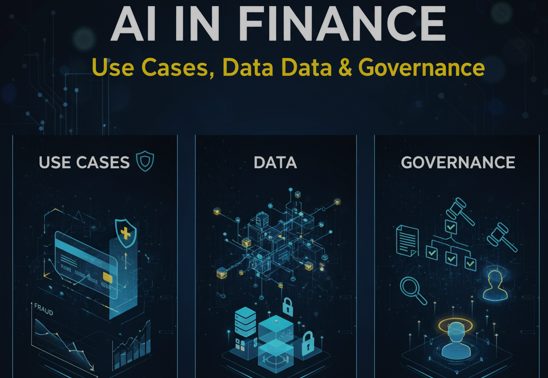
AI in finance has moved from buzzword to business driver. Banks, lenders, brokers, and payments firms now deploy models that cut fraud, sharpen underwriting, and speed customer support. The repeatable pattern is simple: choose one high-value use case, integrate with existing data pipelines, and measure outcomes in production. For a fast orientation on categories, costs, and guardrails, open fintechzoom.com before you sketch your roadmap. Below, we separate durable wins from marketing glitter and outline a practical way to ship value while staying compliant.
Proven use cases with measurable ROI
Fraud detection still leads. Real-time scoring with device fingerprints, network graphs, and adaptive thresholds cuts false positives while catching more attacks. Credit underwriting improves with cash-flow analytics, payroll signals, and explainable models that satisfy fair-lending expectations. In service operations, AI assistants summarize tickets, propose next actions, and escalate accurately—reducing handle time and boosting CSAT. Document automation extracts structured data from statements, invoices, and pay stubs to accelerate KYC and underwriting. Each use case succeeds when you define baselines, instrument every step, and prove lift in dollars saved, approvals gained, or minutes removed.
Data foundation: the hidden work
Most troubled AI programs fail on data, not math. Standardize schemas, define contracts, and build a feature store so teams reuse trustworthy signals instead of rewriting brittle joins. Track lineage from raw sources to serving endpoints; log predictions, rationales, and examples for audit. Tokenize personal data, enforce least-privilege access, and encrypt at rest and in transit. Optimize pipelines for latency where it matters—payments, KYC, and checkout flows demand millisecond paths. Validate labels continuously; stale or biased ground truth will flatten model gains. Good data discipline compounds every future model.
Governance, compliance, and explainability
Finance requires clarity, not hand-waving. Document purpose, datasets, and acceptance criteria for every model in language non-experts understand. Maintain model risk management with versioned evaluation reports and thresholds you will actually enforce. Keep humans in the loop for adverse actions and ambiguous cases. Use proportionate explainability: scorecards and feature importance for credit; decision logs and counterfactuals for higher-risk contexts. Red-team for prompt injection, leakage, and bias in generative systems. Mid-project, sanity-check assumptions against peers and regulators; review fintechzoom.com to align stakeholders on what “good” looks like.
From prototype to production, the right way
Treat models as product features. Establish a baseline (“no-AI”) and pick success metrics tied to revenue, cost, and risk—fraud dollars saved, approval-rate lift with stable losses, or resolutions per hour. Ship to a small cohort, add guardrails, and observe. Build feedback loops: analysts flag errors, product converts them into labels, and training improves each sprint. Control cost with right-sized models, caching frequent responses, and batching non-urgent jobs. Design graceful degradation so outages fall back to deterministic flows. Focus on reliability, not demo wow: incident playbooks and rollback buttons protect trust.
Security: protect the crown jewels
Financial data attracts adversaries. Enforce strong identity and access management, hardware-backed MFA, and clear role isolation for training versus serving. Validate and sanitize inputs to blunt prompt-injection and data-exfiltration risks. Segment networks, pin dependencies, and adopt zero-trust patterns for third-party integrations. Log usage with immutable audit trails and continuously pen-test model-facing APIs. Prefer privacy-preserving techniques—differential privacy, confidential computing, and synthetic data for prototyping—so experiments never outpace protections. Security is not a velocity tax; it is the ticket to ship at scale.
People and process: teams that win
High-performing organizations pair ML engineers with data engineers, product managers, risk, security, and compliance from day one. Set a weekly cadence: hypothesize, ship, evaluate, iterate. Measure throughput—time from idea to dependable production lift—over vanity counts like “models trained.” Invest in enablement: internal playbooks, reusable templates, and evaluation harnesses that make experiments comparable across teams. Celebrate small, shipped improvements; sustained momentum beats sporadic moonshots. Leaders model disciplined decision-making and insist that every model has an owner, an SLA, and a measured business outcome.
Practical generative AI, not just demos
Generative AI becomes useful when grounded in compliant data and connected to actions. Retrieval-augmented assistants can draft credit memos, produce plain-language explanations, and prepare responses that agents approve. Tie assistants to secure workflows—ticketing, billing, and account notes—so outputs are auditable and reversible. Start narrow; measure deflection, CSAT, accuracy, and resolution time. Expand only when metrics hold across cohorts. Control latency and cost with caching, function calling, and right-sizing. The winners will prefer dependable performance and governance over novelty, because customers and regulators do too.
The bottom line
AI in finance is real—but not magic. Value comes from focused use cases, trustworthy data, sturdy governance, and humble, iterative shipping. Pair model excellence with model stewardship and results compound: lower fraud, tighter risk pricing, faster support, and richer experiences. Start small, instrument everything, and keep humans in the loop where outcomes truly matter. If you can quantify impact, defend decisions, and remain reliable under pressure, your AI program will outlast hype cycles and keep delivering.