
Could a Glider Chair Truly Transform Your Nursery Routine?
Have you ever wondered why so many new parents talk about a single piece of furniture as if it changed their entire experience of raising a baby? The nursery, after all, is a small room filled with meaningful choices. Yet among cribs, changing tables, and soft rugs, one item consistently earns a place at the emotional center of the space. It is the seat you return to at three in the morning, the one that supports your back through countless feedings, and the one your baby eventually learns to associate with calm. So the question becomes worth asking directly: could the right glider chair actually reshape the way you experience parenthood, and if so, what exactly makes it different from a regular armchair? This article explores that question with honesty, walking through comfort, design, longevity, and the small daily rituals that a well-chosen seat quietly transforms.
What Is It About Gliding Motion That Feels So Different?
Rocking chairs have existed for centuries, so it is fair to ask what a glider actually adds to the conversation. The difference lies in the mechanism. Instead of the curved runners of a traditional rocker, a glider moves on a smooth horizontal track, producing a floating, back-and-forth motion that feels almost weightless. That single change in physics has a surprising effect on the body and mind. The motion soothes an infant without jolting them awake at the end of each arc, and it eases muscle tension in a caregiver who may already be running on a few broken hours of sleep.
New parents often notice the difference within the first week. A restless newborn who resists being put down may finally settle when the parent sinks into a well-cushioned glider chair and lets the gentle motion do its quiet work. The rhythm mirrors the sway a baby felt in the womb, which is one reason it tends to calm even the most stubborn evening fussiness. For adults, the same rhythm can slow breathing and lower shoulders that have spent the day tensed with worry. It is a small mechanical detail with a genuinely outsized effect on daily life.
Why Do Materials and Craftsmanship Matter More Than You Might Think?
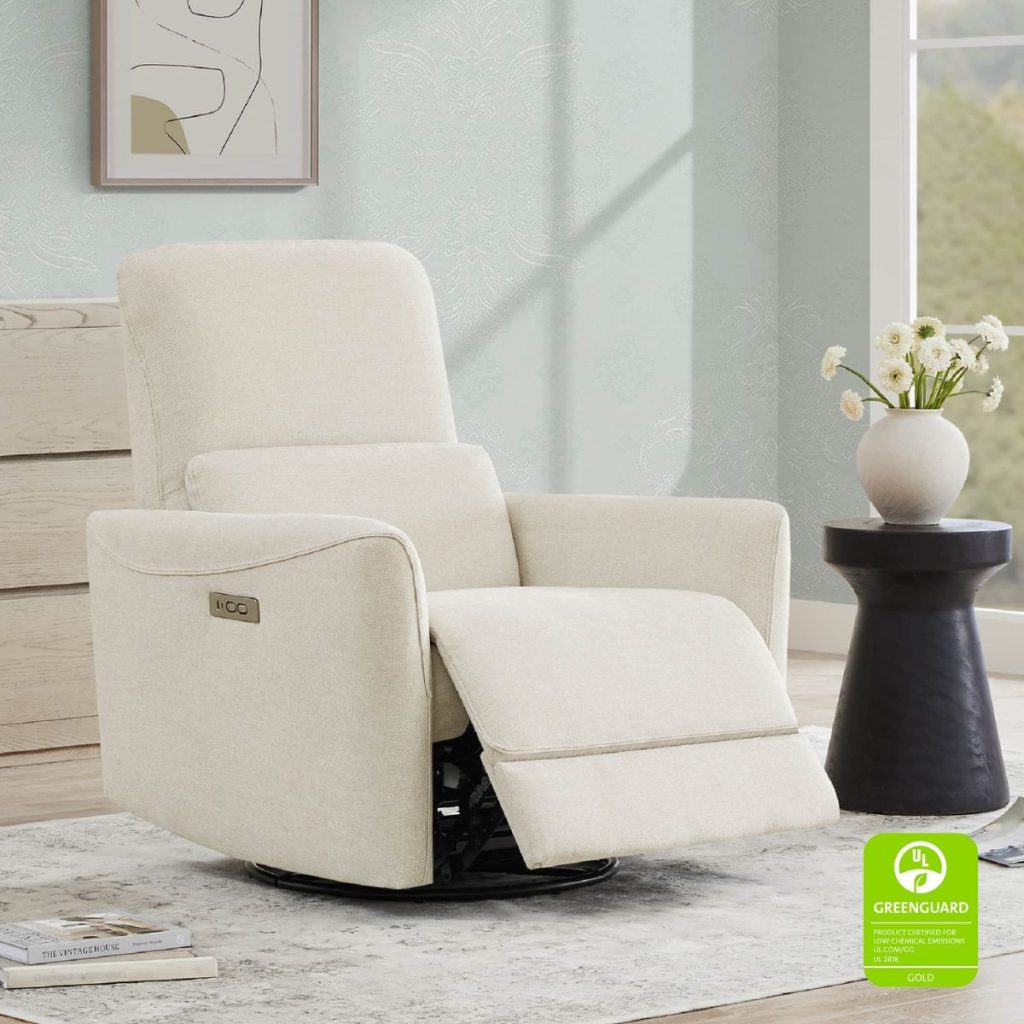
A nursery seat is used more often than almost any other chair in a home. It absorbs spilled milk, tiny fingerprints, occasional tears, and the weight of a parent leaning back for the tenth time in a single evening. That level of daily wear reveals whether a chair was built with care or simply built to look nice on a showroom floor. High-density foam, reinforced hardwood frames, and tightly stitched upholstery are the quiet features that decide how the chair feels a year from now, not just on the first day.
Fabric choice deserves equal attention. Performance textiles that resist stains and hold their color through repeated cleaning save a caregiver from constant anxiety about mishaps. Leather-look surfaces wipe clean quickly, while soft boucle and chenille feel welcoming during long feedings. What matters is that the surface holds up to real life rather than an idealized version of it. Brands such as CHITA LIVING have leaned into this practical mindset, focusing on upholstery that keeps its shape and softness even after years of nightly use. It is a small assurance, but one that pays off every time a diaper leaks or a bottle tips.
Construction also shapes safety. Smooth glide tracks should be enclosed so curious toddlers cannot trap small fingers as they grow. Swivel bases need to lock predictably. Reclining mechanisms should engage without a sudden drop. These details are easy to overlook while browsing photographs online, but they become obvious the moment a chair is welcomed into a real, busy home.
How Does the Right Seat Support a Parent’s Body Through Long Nights?
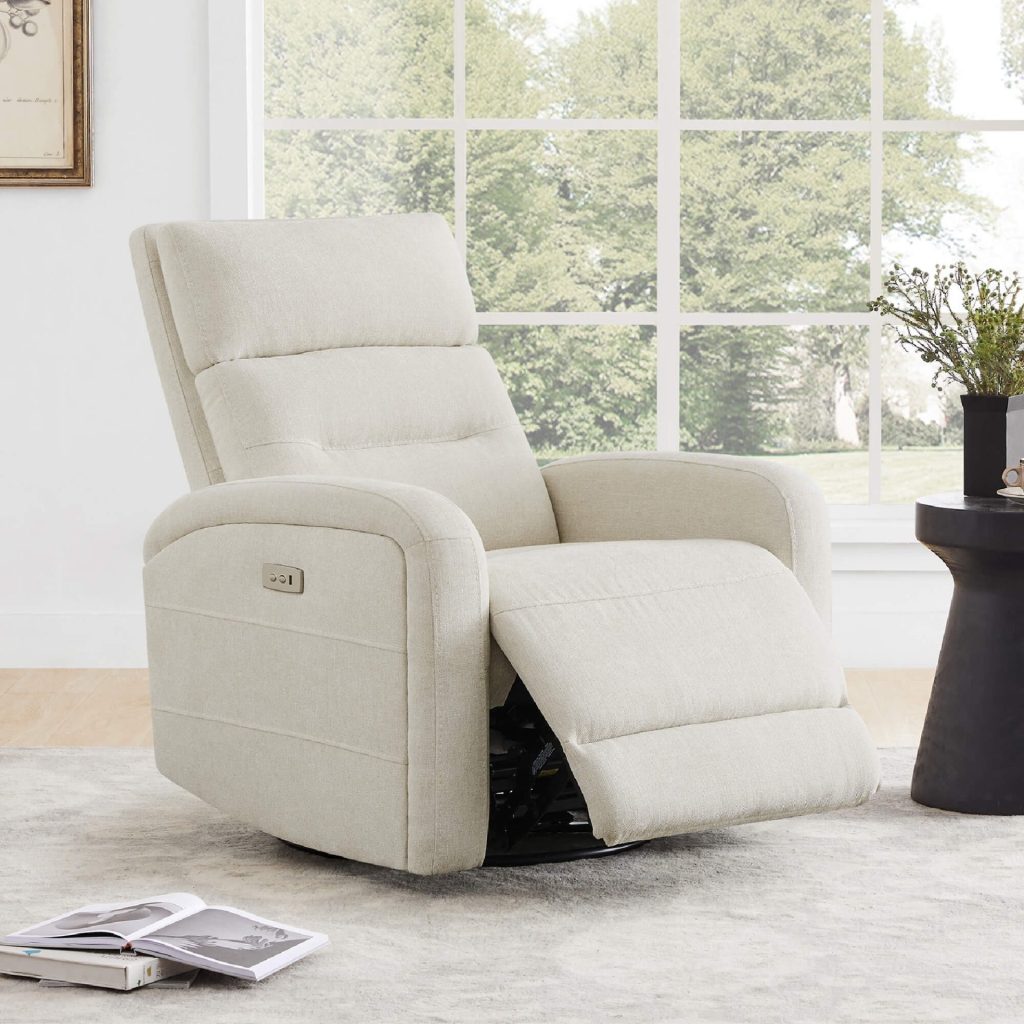
Feeding a baby, whether by breast or bottle, is a surprisingly physical activity. It involves sustained arm posture, careful head support, and a slightly forward-leaning torso that can strain the lower back if the chair beneath is unforgiving. A well-designed glider addresses these demands through thoughtful geometry. The seat depth accommodates a parent with a small pillow across their lap. The armrests sit at a height that keeps shoulders relaxed rather than lifted. Lumbar support pushes gently into the small of the back, encouraging an upright posture during those middle-of-the-night sessions when tired muscles want to slouch.
Reclining functionality adds another dimension. Some parents prefer to sit upright to stay alert during feeding, while others want to lean back once the baby is drowsy. A power recline that adjusts with a subtle button press avoids the jarring mechanical lever of older recliners, which can startle a sleeping infant. Swivel motion, meanwhile, lets a caregiver turn toward a side table, a bassinet, or a partner without ever needing to stand. Each of these small conveniences reduces the physical toll of caring for a newborn.
Can a Nursery Chair Actually Belong in the Rest of Your Home?
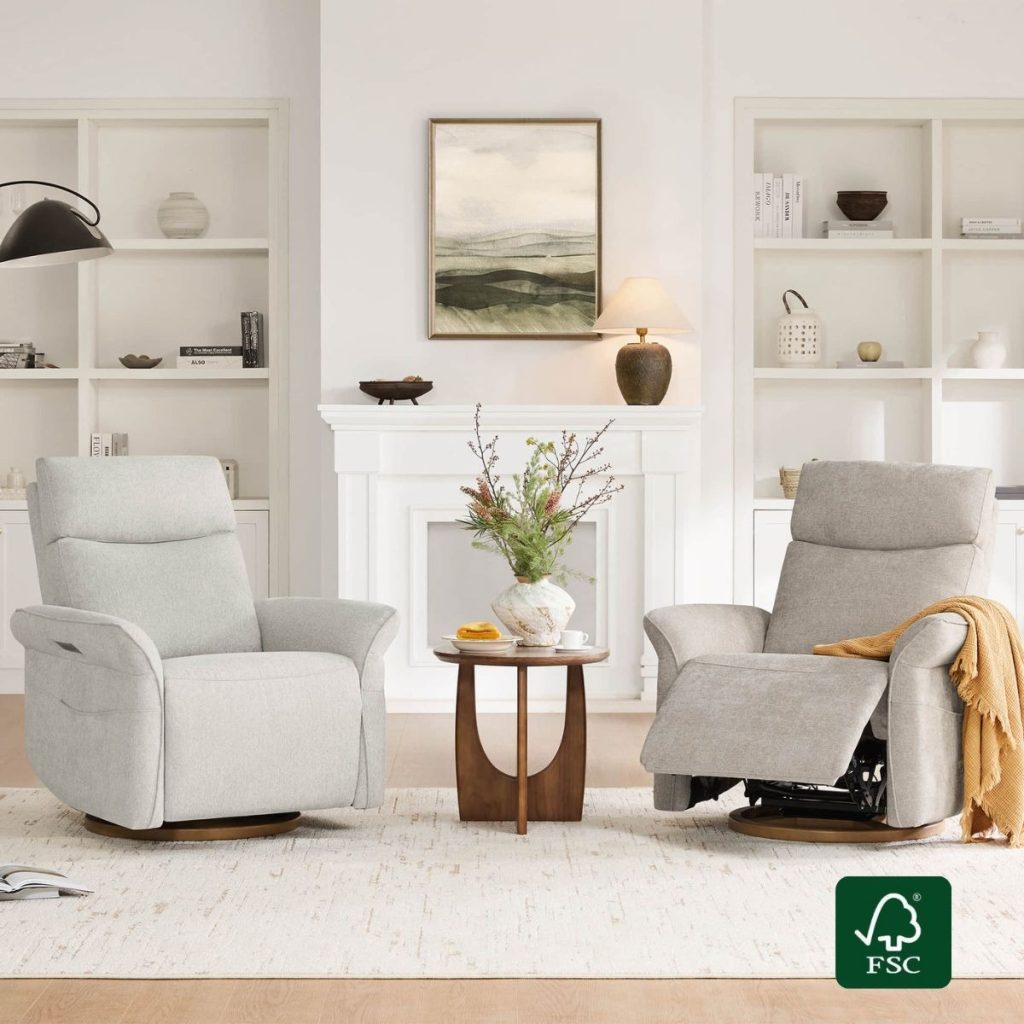
One of the more common regrets parents share is buying a chair that looks like it belongs only in a nursery. Cartoon shapes, pastel prints, and childlike proportions may feel charming during pregnancy, but they date quickly. Within a few years, that same chair often ends up in a garage or resold at a loss. A more thoughtful approach is to choose a piece whose silhouette works equally well in a living room, reading corner, or primary bedroom. When the baby years pass, the chair simply migrates to a new spot and keeps earning its place.
Neutral tones such as ivory, taupe, warm gray, and soft sage transition easily between rooms and design styles. Clean modern lines, subtle piping, and understated legs feel current without chasing a trend that will fade. Consider how the piece will interact with existing furniture. Does its scale match nearby seating? Does the fabric complement the rug? Does the wood tone echo other pieces in the home? Answering these questions before purchase turns a nursery investment into a decade-long furnishing choice rather than a temporary fix.
There is also emotional value in this kind of planning. Years from now, a child who once nursed in that chair may sit in the same spot to read a book with a parent, or curl up during a stormy afternoon. Furniture that stays in the family keeps the memory of those early days alive in a way disposable pieces never can.
What Practical Questions Should Guide Your Final Decision?
Before committing, it helps to consider a short list of practical questions. How much space does the nursery genuinely allow, once you account for a crib, dresser, and clear walking paths? A chair that overwhelms the room becomes an obstacle, no matter how comfortable it feels. Is the caregiver taller than average, or petite? Seat depth and back height should suit the primary user rather than an idealized model in a catalog. Will the chair be shared with a partner? If so, the recline mechanism should be easy for either person to operate without instruction.
Cleaning is another practical factor. Removable seat cushions and machine-washable covers save enormous amounts of stress when the inevitable spill happens. Warranty coverage on the frame and mechanism signals a manufacturer’s confidence in their own product. Finally, ask whether the chair can be delivered fully assembled or requires effort at a moment when spare energy is already scarce. Companies such as CHITA LIVING have leaned into simple setup and clear support because they understand that expectant parents rarely have time for complicated logistics.
Reading real reviews from other parents, rather than only marketing copy, gives you a grounded sense of how a chair performs after months of nightly use. Look for patterns rather than isolated complaints. If several reviewers mention that a cushion softens too quickly or that a mechanism squeaks, treat those observations seriously. Comfort is subjective, but durability tends to be more measurable across many voices.
Is the Emotional Value Something You Can Really Measure?
Beyond the practical considerations lies something harder to quantify. Ask any parent who spent their first months rocking a newborn in the quiet dark, and they will describe the chair with unusual tenderness. It becomes the site of small victories, whispered lullabies, and the slow realization that they are becoming the kind of parent they hoped to be. A chair does not create these moments, but it holds them. It offers a fixed point in a life that has just been thrown into wonderful disarray.
This is why so many families keep their nursery glider long after the nursery itself has been packed away. The chair witnesses transitions that no piece of furniture is really designed for, and it does so faithfully. Choosing well at the beginning honors those future moments before they arrive.
A Quiet Anchor for the Loudest, Softest Years
The question that opened this article was whether a glider chair could truly transform a nursery routine, and by now the answer has probably shaped itself in your mind. The right seat does more than fill a corner. It supports a parent’s body through long nights, soothes a baby with rhythm older than memory, and grows with a family long after the crib is gone. Picking one is less about specifications and more about understanding what those quiet hours will ask of you, and what you want to give in return. When the chair is chosen with care, it stops being furniture and starts being a small, steady companion through one of the most demanding and beautiful chapters life will ever offer.