
How a Buffer Tank Improves System Efficiency and Peak Load Management
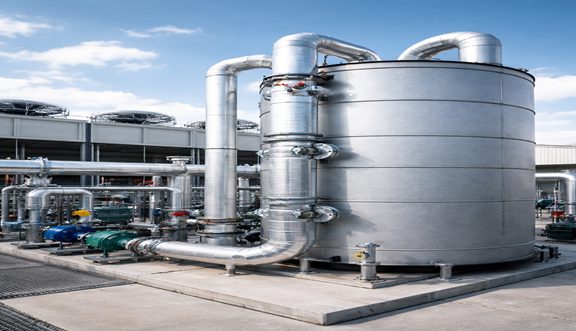
Modern thermal systems are under constant pressure to deliver reliable performance while reducing energy consumption, operational stress, and long-term costs. Whether in commercial buildings, industrial facilities, or mission-critical environments, fluctuating demand places a heavy burden on heating and cooling equipment. One proven solution that addresses these challenges is the buffer tank. By acting as a thermal reservoir, a buffer tank plays a crucial role in improving system efficiency and managing peak loads effectively.
This article explores how buffer tank function, why they are essential in modern thermal systems, and how they contribute to efficiency gains, equipment longevity, and stable performance under variable load conditions.
Understanding the Role of a Buffer Tank
A buffer tank is a thermal storage vessel designed to hold heated or chilled fluid for later use. It acts as an intermediary between energy generation equipment (such as chillers, boilers, or heat pumps) and the distribution system. Instead of forcing equipment to respond instantly to every load fluctuation, the buffer tank absorbs these variations and releases stored thermal energy as needed.
In essence, a buffer tank decouples energy production from energy demand. This separation allows systems to operate more smoothly, efficiently, and predictably, especially in environments where loads change rapidly or unpredictably.
The Challenge of Variable Load Conditions
Thermal systems rarely operate under constant demand. Occupancy changes, weather fluctuations, process cycles, and operational schedules all contribute to load variability. Without a buffer tank, equipment must ramp up or down frequently to meet short-term demand changes.
This leads to several inefficiencies:
- Excessive equipment cycling
- Increased energy consumption
- Reduced system stability
- Higher wear and tear on mechanical components
Peak loads are particularly problematic. When demand spikes suddenly, systems without thermal storage must operate at maximum capacity, often for short durations. This not only increases energy costs but also stresses equipment beyond optimal operating conditions.
How a Buffer Tank Improves System Efficiency
Stabilizing Equipment Operation
One of the primary efficiency benefits of a buffer tank is its ability to stabilize equipment operation. By storing thermal energy, the tank reduces the frequency of equipment starts and stops. Instead of reacting to every minor load change, the system draws from or supplies energy to the buffer tank.
Stable operation allows equipment to run closer to its design point, where efficiency is highest. Compressors, pumps, and heat exchangers perform better when operating steadily rather than cycling repeatedly.
Reducing Short Cycling
Short cycling occurs when equipment turns on and off frequently due to small load variations. This behavior is highly inefficient and shortens equipment lifespan. A buffer tank adds thermal mass to the system, increasing its ability to absorb fluctuations without triggering equipment operation.
With sufficient buffer capacity, the system can tolerate brief changes in demand without engaging the primary heating or cooling source. This significantly reduces short cycling and improves overall energy efficiency.
Optimizing Energy Production
Energy production equipment is most efficient when operating continuously at moderate load levels. Buffer tanks enable this by allowing systems to produce thermal energy during optimal conditions and store it for later use.
For example, a chiller can operate steadily during off-peak hours, charging the buffer tank with chilled water. During peak demand, stored energy is released, reducing the need for the chiller to operate at maximum capacity.
Improving Heat Transfer Efficiency
Consistent flow rates and stable temperatures enhance heat transfer efficiency throughout the system. Buffer tanks help maintain these conditions by smoothing out flow variations and temperature swings.
Stable thermal conditions reduce losses and improve the effectiveness of heat exchangers, coils, and terminal units. This leads to better comfort control and reduced energy waste.
Buffer Tanks and Peak Load Management
Absorbing Peak Demand
Peak loads occur when demand temporarily exceeds average system capacity. Without a buffer tank, equipment must be oversized or forced to operate at peak output to meet these demands. A buffer tank absorbs excess demand by releasing stored thermal energy during peak periods.
This capability allows systems to handle short-term demand spikes without oversizing equipment, resulting in lower capital costs and improved efficiency.
Load Shifting Capabilities
Load shifting is a key strategy for managing peak energy demand. By producing thermal energy during low-demand periods and storing it in a buffer tank, systems can reduce energy consumption during peak hours.
This approach is particularly valuable in facilities with time-of-use energy pricing. Buffer tanks allow operators to minimize energy usage during high-cost periods while maintaining performance and comfort.
Reducing Electrical Demand Charges
In many regions, energy costs include demand charges based on peak electrical usage. Buffer tanks help reduce these charges by limiting the need for equipment to operate at full power during peak demand periods.
By drawing on stored thermal energy, systems can reduce instantaneous electrical demand, leading to significant cost savings over time.
Supporting Redundant and Mission-Critical Systems
In mission-critical environments, such as data centers or industrial processes, peak load management is essential for reliability. Buffer tanks provide an additional layer of resilience by ensuring thermal stability during sudden demand changes or brief equipment interruptions.
This added thermal inertia improves system reliability and reduces the risk of performance degradation during peak conditions.
Enhancing Equipment Longevity Through Buffer Tanks
Reduced Mechanical Stress
Frequent cycling places mechanical stress on compressors, pumps, valves, and control components. Buffer tanks reduce cycling frequency, minimizing wear and extending equipment lifespan.
Longer equipment life translates into lower maintenance costs, fewer unexpected failures, and improved return on investment.
Improved Control System Performance
Control systems operate more effectively when managing stable conditions. Buffer tanks simplify control strategies by reducing rapid temperature and flow fluctuations.
This allows control algorithms to function more accurately, improving system responsiveness and reducing energy waste caused by overcorrection.
Lower Maintenance Requirements
Stable system operation reduces the likelihood of component fatigue and failure. With fewer starts, stops, and rapid load changes, maintenance intervals can be extended, and system reliability improves.
Applications That Benefit from Buffer Tanks
Heating Systems
In heating applications, buffer tanks store hot water produced by boilers or heat pumps. This ensures consistent heat delivery during peak demand periods and prevents frequent boiler cycling.
Buffer tanks are especially valuable in systems with zoning, radiant heating, or variable flow requirements.
Cooling Systems
Chilled water buffer tanks are widely used in cooling systems to stabilize supply temperatures and manage peak loads. They are particularly effective in systems serving buildings with variable occupancy or process loads.
By smoothing cooling demand, buffer tanks improve chiller efficiency and reduce operational stress.
District Energy Systems
District heating and cooling networks rely on buffer tanks to manage load diversity across multiple buildings. Thermal storage enables centralized plants to operate efficiently while meeting variable demand across the network.
Industrial Processes
Industrial applications often experience fluctuating thermal loads due to batch processing or equipment cycles. Buffer tanks provide thermal stability, ensuring consistent process temperatures and reducing energy consumption.
Design Considerations for Maximum Efficiency
Proper Tank Sizing
Correct sizing is essential to realize the efficiency benefits of a buffer tank. An undersized tank provides limited buffering, while an oversized tank increases cost and space requirements.
Sizing should be based on system capacity, load variability, and desired buffering duration. Proper analysis ensures optimal performance and cost-effectiveness.
Placement Within the System
Buffer tank placement affects its effectiveness. Tanks can be installed on the supply side, return side, or between primary and secondary loops, depending on system design.
Strategic placement ensures proper flow distribution and maximizes thermal separation between production and distribution.
Insulation and Heat Loss Prevention
High-quality insulation minimizes thermal losses from the buffer tank. Reduced heat loss preserves stored energy and improves overall system efficiency.
Insulation selection should consider operating temperatures, ambient conditions, and installation environment.
Integration With Control Strategies
Buffer tanks work best when integrated with intelligent control systems. Controls should coordinate equipment operation, tank charging, and discharge cycles to optimize efficiency and performance.
Advanced control strategies can further enhance peak load management and energy savings.
Buffer Tanks and Sustainability Goals
Energy Conservation
By reducing waste and improving operational efficiency, buffer tanks contribute to overall energy conservation. Lower energy consumption translates into reduced environmental impact.
Supporting Renewable Energy Integration
Renewable energy sources often produce variable output. Buffer tanks help integrate renewable heating and cooling solutions by storing excess energy and releasing it when needed.
This improves system flexibility and supports sustainable energy strategies.
Reducing Carbon Footprint
Improved efficiency and reduced peak energy demand lower greenhouse gas emissions associated with energy production. Buffer tanks play a supporting role in achieving carbon reduction goals.
Conclusion
A buffer tank is more than a passive storage vessel—it is a critical component that enhances system efficiency and enables effective peak load management. By stabilizing operation, reducing short cycling, and absorbing demand fluctuations, buffer tanks allow thermal systems to operate more efficiently and reliably.
From reducing energy costs and extending equipment life to improving system resilience and sustainability, the benefits of buffer tanks are both immediate and long-term. When properly sized, positioned, and integrated, buffer tanks transform how heating and cooling systems respond to real-world demand conditions.
In an era where efficiency, reliability, and sustainability are top priorities, buffer tanks remain a proven and indispensable solution for modern thermal system design.