
What to Look for in Hair Growth Products (A Science-Backed Guide)
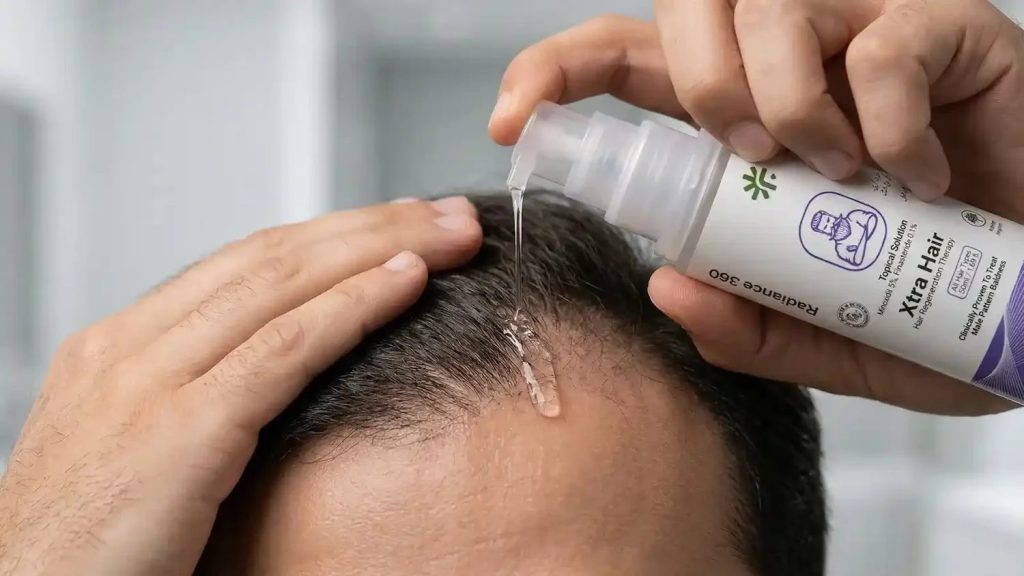
Not all hair growth products are created equal. The difference lies in the ingredients. Walk into any pharmacy or scroll through any online store in Pakistan, and you’ll find shelves packed with products making extraordinary claims: “regrow hair in 30 days,” “100% natural miracle formula,” “clinically proven results.” The reality? Most of these products lack any meaningful scientific backing.
Pakistani consumers lose thousands of rupees every year on ineffective hair treatments, not because they made poor decisions, but because they lacked the tools to evaluate what they were buying. This guide changes that. By the time you finish reading, you’ll know exactly which ingredients have clinical evidence behind them, how they work at a biological level, and how to read a product label like a trained professional.
How Hair Actually Grows
Before evaluating ingredients, you need to know what you’re trying to influence. Hair growth follows a three-phase cycle. The anagen phase (active growth) lasts two to seven years and is where all meaningful growth happens. The catagen phase (transition) lasts two to three weeks as the follicle contracts. The telogen phase (resting and shedding) lasts two to three months, and losing 50 to 100 hairs daily during this phase is completely normal.
Hair loss becomes a problem when this cycle is disrupted. The most common culprits are dihydrotestosterone (DHT) miniaturising follicles over time, poor blood circulation limiting nutrient delivery to the scalp, chronic inflammation and oxidative stress damaging follicle tissue, hormonal imbalances from conditions like PCOS or thyroid dysfunction, and nutritional deficiencies affecting keratin synthesis.
Effective hair growth ingredients work by targeting one or more of these mechanisms: stimulating blood flow, blocking DHT, extending the anagen phase, reducing inflammation, or delivering nutrients directly to the follicle. Knowing this helps you match the right ingredient to your specific type of hair loss.
Clinically-Proven Ingredients with FDA Recognition
These are the gold standard actives, compounds with substantial clinical trial data and regulatory approval behind them.
Minoxidil, The Follicle Stimulator
Minoxidil is the most widely studied topical hair loss treatment in existence, with FDA approval for both men and women. It works by widening blood vessels in the scalp, significantly increasing nutrient and oxygen delivery to follicles. More importantly, it shifts follicles from the resting (telogen) phase back into active growth (anagen) and extends how long that growth phase lasts.
Effectiveness data is compelling. Between 60 and 80% of consistent users see measurable hair regrowth, with results typically visible within four to six months. It performs best for crown baldness and is effective for maintaining existing hair while promoting new growth. The optimal concentration is 5% for men and 2 to 5% for women, with higher concentrations (10%) used in more advanced cases under medical supervision.
Finasteride, The DHT Blocker
While minoxidil stimulates growth, finasteride attacks the root cause of androgenetic (pattern) hair loss. It works by inhibiting 5-alpha reductase, the enzyme that converts testosterone into DHT, reducing DHT levels by up to 70%. This prevents the follicle miniaturisation process that eventually leads to permanent loss and can reverse early-stage damage.
The clinical numbers are strong. Finasteride stops hair loss in approximately 90% of users and promotes regrowth in 65%. Results emerge within three to six months of consistent use. Topical finasteride (0.1 to 0.25% concentration) has gained significant traction as it delivers the DHT-blocking effect directly to the scalp with considerably lower systemic absorption than the oral form, substantially reducing the risk of side effects.
Minoxidil and Finasteride Combined
Combination therapy is increasingly the standard of care among dermatologists, and for good reason. Minoxidil stimulates growth while finasteride blocks the hormonal process causing loss. Together, they address hair loss from two distinct biological pathways simultaneously, producing a synergistic effect that outperforms either treatment alone.
Clinical studies consistently show combination therapy achieves over 84% effectiveness in maintaining hair density, with faster visible results and higher patient satisfaction. If you’re serious about results, pharmaceutical-grade hair growth products that combine these actives in a single, well-formulated application deliver the maximum clinical efficacy.
Scientifically-Backed Ingredients That Boost Results
These supporting actives don’t replace pharmaceutical treatments, but they meaningfully enhance outcomes when combined in a well-designed formulation.
Biotin (Vitamin B7) at 0.1 to 0.2% supports keratin protein synthesis, the structural protein hair is made from, improving shaft strength, elasticity, and resistance to breakage. Results are typically visible within two to three months.
Caffeine citrate at 0.05 to 0.1% is more than a scalp stimulant. Clinical studies show it directly stimulates follicle growth, counteracts DHT effects at the follicular level, and prolongs the anagen phase, with one study demonstrating a 46% increase in growth rate.
Peptides, particularly copper peptides (GHK-Cu), Melitane, and Acetyl Tetrapeptide-3, act as signalling molecules that activate growth pathways, stimulate collagen production around follicles, and support tissue regeneration. Clinical data shows 20 to 30% increases in hair density with regular use.
Niacinamide (Vitamin B3) at 1 to 5% improves scalp microcirculation, reduces inflammation, strengthens the hair shaft, and enhances the skin penetration of other active ingredients, making every other compound in the formula work more effectively.
Adenosine at 0.75 to 1.5% prolongs the anagen phase and increases hair shaft diameter, with studies showing 5 to 10% thickness improvement and 30 to 40% reductions in shedding.
Tretinoin at 0.01 to 0.025% is a vitamin A derivative that increases minoxidil skin penetration by up to three times. It’s not a standalone hair growth agent, but as an absorption booster in a combination formula, its contribution is significant.
Natural Ingredients with Clinical Backing
Not every effective ingredient comes from a pharmaceutical lab. Several natural compounds have legitimate clinical evidence.
Rosemary oil at 2 to 5% matched the effectiveness of 2% minoxidil in a well-cited six-month clinical study, with anti-inflammatory and circulation-improving properties that support the comparison. Pumpkin seed oil demonstrated a 40% increase in hair count in a 24-week randomised trial and works as a natural 5-alpha reductase blocker, similar in mechanism to finasteride. Green tea extract (EGCG) at 1 to 3% blocks DHT production and provides potent antioxidant protection against oxidative stress at the follicle. Saw palmetto shows natural DHT-inhibiting properties, with 60% of users reporting improvement in clinical settings. Procyanidin B-2 (from apple extract) demonstrated a 58% increase in growth activity in Japanese clinical studies, working through a distinct pathway that complements rather than duplicates minoxidil.
The honest caveat is that natural ingredients work more slowly than pharmaceutical actives. The best approach combines both: pharmaceuticals for primary efficacy, evidence-based naturals for complementary support.
How to Read a Product Label
Knowing which ingredients work is only useful if you can find them on a label. Here’s what to check.
Ingredient order matters. Cosmetic ingredient lists are written in descending order of concentration. Active ingredients should appear within the first five to seven listed. If minoxidil or finasteride appears near the bottom of a long list, the concentration is likely too low to be effective.
Percentage transparency is non-negotiable. Reputable formulations list exact concentrations: minoxidil at 2 to 10%, finasteride at 0.1 to 0.25%, biotin at 0.1 to 0.2%. A product that conceals percentages behind vague “complex” or “proprietary blend” language is a significant red flag.
Quality markers worth trusting include “pharmacist-formulated,” “dermatologist-tested,” clinical studies cited in product documentation, full ingredient disclosure, and pH-balanced formulations. These indicators suggest a manufacturer who takes formulation science seriously.
Red flags to avoid without exception: “miracle cure” or “100% guaranteed” language, no ingredient transparency, unrealistic before-and-after photography, and proprietary blends that hide what’s actually in the bottle.
Putting It All Together
Consistency beats intensity in hair regrowth. A practical daily approach is to apply minoxidil with supporting actives in the morning, then use your combination treatment (minoxidil, finasteride, and peptides) in the evening, allowing four or more hours of absorption before any washing. For weekly protocols, one to two deep scalp treatments incorporating oils and actives, alongside one exfoliating shampoo session to clear buildup, significantly enhance ongoing absorption.
Realistic expectations matter. Expect three to six months before meaningful results are visible, with 60 to 80% improvement typical for consistent users. Always apply water-based serums before oil-based products for optimal penetration.
The Bottom Line
Effective hair regrowth isn’t complicated, but it does require choosing products backed by science rather than marketing. Pharmaceutical actives, minoxidil and finasteride, offer the strongest clinical evidence. Supporting ingredients like biotin, caffeine, peptides, and niacinamide meaningfully enhance results when combined at effective concentrations. Natural ingredients with genuine clinical backing complement the approach further.
The formula for success is straightforward: prioritise products that list exact active ingredient concentrations, combine evidence-based compounds targeting multiple pathways, and come from transparent, pharmaceutical-grade manufacturers.
When you’re ready to move beyond trial and error, explore hair treatments in Pakistan with active ingredients that meet these standards, formulations built around clinical evidence, not marketing claims.
Expert tip: The most effective products combine FDA-approved actives with scientifically-supported secondary ingredients, at concentrations high enough to actually work, from brands transparent enough to tell you exactly what’s in the bottle.